Humidity Proof Hairstyles for 30A Summer Days
Summer on 30A brings bright beach mornings, warm evenings, salt air, and the kind of humidity that can change a hairstyle before you reach your destination. The best humidity proof hairstyles do not depend on forcing every strand into perfect submission. They work with your natural texture, reduce unnecessary friction, and use shape, hold, and preparation to stay polished in coastal weather.
Whether you are heading to the beach, meeting friends in Seaside, attending a wedding in Rosemary Beach, taking family photos, or planning a night out along 30A, the right style can make the entire day easier. A look that is designed for humidity will usually last longer, photograph better, and require fewer emergency touch-ups than a style chosen for a dry indoor environment.
This guide covers the most reliable summer styles for fine, thick, curly, wavy, and color-treated hair. It also explains what to do the night before, which product categories help control frizz, and when a professional blowout or event style is worth booking.
Why 30A Humidity Changes the Way Hair Behaves
Humidity describes moisture in the air, but dew point is often a better measure of how muggy conditions feel. The National Weather Service explains that a higher dew point means more moisture is present in the air, which is why Florida summer days can feel especially heavy and sticky.
Hair responds to that moisture because individual strands absorb water from the surrounding air. The process can disrupt the temporary bonds that help hold a blowout, smooth finish, curl pattern, or straightened shape.
The result depends on your hair. Naturally wavy or curly hair may expand, shrink, or form a stronger pattern. Fine hair may lose volume and become limp. Thick or porous hair may swell and frizz. Color-treated hair may react more strongly because chemical processing can increase porosity.
Humidity proof hairstyles are successful because they account for this movement instead of pretending it will not happen. A textured braid, controlled wave, or polished low bun can remain intentional even when the air adds a little volume.
The Best Humidity Proof Hairstyles for a Beach Day
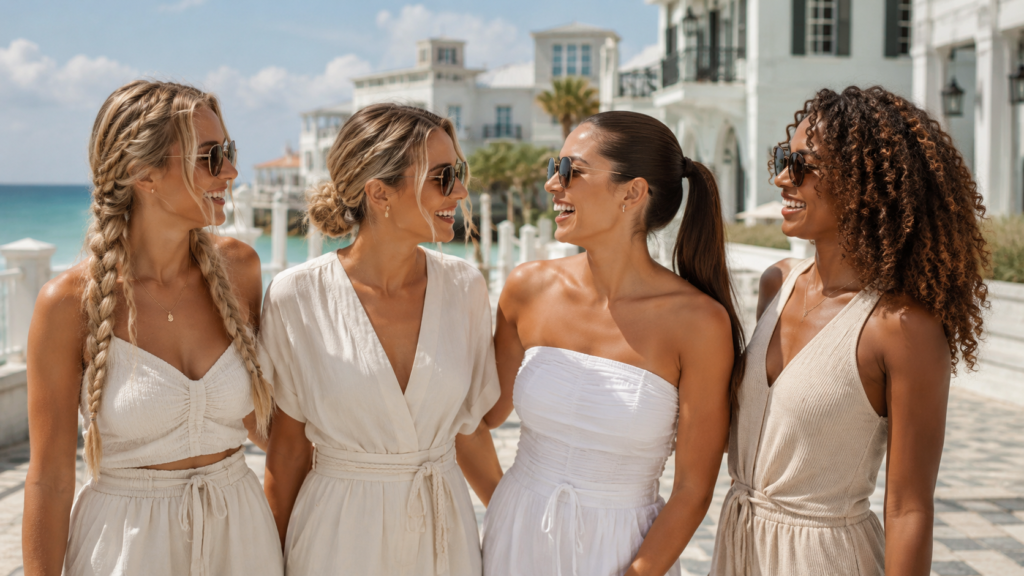
A beach-day hairstyle has to handle more than humidity. Practical humidity proof hairstyles also account for wind, salt, movement, and changing plans. Wind, sunscreen, sunglasses, hats, saltwater, and repeated movement all affect the final look.
Loose Beach Braids
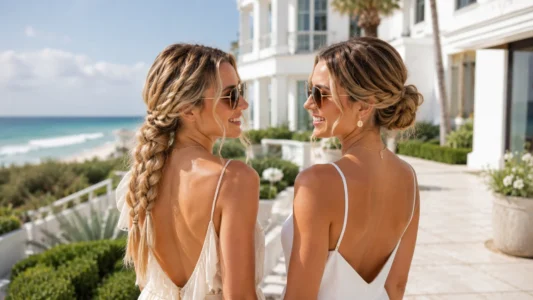
Loose braids are one of the easiest coastal styles because they contain the hair without requiring a perfectly smooth finish. A single low braid, two relaxed braids, or a soft side braid can all work depending on length and texture.
Apply a lightweight leave-in conditioner or smoothing cream before braiding. Keep the braid secure but not painfully tight, especially around the hairline.
When you release the braid later, the hair often has soft texture that looks intentional rather than undone. Loose braids are especially practical for medium-to-long hair and anyone moving between the beach and an evening plan.
Low Messy Bun
A low bun keeps hair off the neck while allowing a soft, relaxed finish. It works particularly well when the hair has natural wave, texture, or a little second-day grip.
Gather the hair near the nape and secure it without pulling tightly at the temples. Twist or loop the length into a bun, then pin the shape rather than relying on one elastic to hold everything.
A few face-framing pieces can soften the look, but keep them limited on very windy days. Humidity proof hairstyles should look deliberate even after several hours, and a low bun gives small changes room to blend into the design.
Slicked-Back Ponytail
A slicked-back ponytail is ideal when you want a cleaner, more modern look. It can work for brunch, shopping, a pool day, or an evening outfit.
Use a small amount of smoothing product through the top and sides, then brush the hair into a mid or low ponytail. A flexible styling gel or cream can control short pieces without creating a brittle shell.
Avoid pulling the ponytail excessively tight. The American Academy of Dermatology advises changing hairstyles that pull on the hair and using gentler styling habits to reduce breakage and damage.
Styles That Look Better With a Little Humidity
Some styles become frustrating because they rely on every strand staying flat. Others become softer, fuller, and more natural as the day continues.
Texturized waves are a good example. Instead of creating identical curls, the stylist builds movement that can relax gradually without looking ruined.
A tousled lob, soft bend, curly updo, or half-up textured style can also benefit from a little expansion. These humidity proof hairstyles allow the hair to move while preserving the overall silhouette.
The key is controlled texture. Hair should be prepared with moisture balance, heat protection when needed, and a product that adds light definition without making the strands sticky.
Why Sleek Straight Hair Is Harder to Maintain
A smooth, straight style creates a strong contrast with the hair’s natural response to moisture. When the air is humid, even a small amount of reversion or swelling can become visible.
This does not mean straight styles are impossible on 30A. It means they require more preparation, stronger humidity protection, careful sectioning, and realistic expectations.
If your hair is naturally curly, coarse, highly porous, or color-treated, a glass-straight finish may need more heat and repeated touch-ups than the result is worth. Heat and overhandling can also leave the hair drier, making future frizz more noticeable.
For outdoor weddings, beach photos, or long events, consider a smooth low ponytail, structured bun, or soft wave instead. These humidity proof hairstyles preserve the polished feeling without depending on every strand remaining perfectly straight.
Humidity Proof Hairstyles for Fine Hair
Fine hair usually needs hold without weight. Fine-hair humidity proof hairstyles depend on light layers and controlled texture. Heavy creams and oils may control flyaways but can also flatten the roots.
Start with a lightweight volumizing product at the roots and a small amount of anti-frizz serum through the mid-lengths and ends. Apply less product than you think you need, then add more only where necessary.
Soft High Ponytail
A softly lifted ponytail can give fine hair shape without requiring a complicated set. Add root volume before gathering the hair and avoid overloading the top with smoothing product.
Wrap a small section around the elastic for a finished look. Light hairspray can help hold the silhouette without making the ponytail stiff.
Textured Half-Up Style
A half-up style preserves some volume around the face while securing the sections most likely to fall flat or become messy.
Create soft bends through the loose hair, then secure the top section with pins or a small elastic. Fine hair often holds better when it is not freshly coated with heavy conditioner.
For fine hair, the most dependable humidity proof hairstyles use strategic texture and light support rather than thick layers of product.
Humidity Proof Hairstyles for Thick Hair
Thick hair has the advantage of natural body, but it can become hot, heavy, and expansive in humid weather. Thick-hair humidity proof hairstyles should distribute weight rather than pull from one point.
Preparation should focus on moisture balance and section control. Apply leave-in conditioner and smoothing cream evenly rather than concentrating everything on the surface.
Braided Low Bun
Begin with a low ponytail, braid the length, and wrap the braid into a bun. The braid distributes the weight and gives pins something secure to hold.
This style is useful for weddings, outdoor dinners, and long events because the shape remains visible even if the hair expands slightly.
Controlled High Bun
A high bun keeps thick hair away from the neck and shoulders. Build the style in sections so the weight does not depend on one elastic.
Use sturdy pins and a flexible finishing spray. A polished hairline can be paired with a slightly textured bun so the style does not look overly severe.
Humidity proof hairstyles for thick hair should manage weight and volume without making the scalp feel strained.
Humidity Proof Hairstyles for Curly and Wavy Hair
Curly and wavy hair often performs best when the natural pattern is supported rather than stretched into a completely different texture. Pattern-friendly humidity proof hairstyles allow the curl structure to remain part of the finish.
Apply products to damp hair in sections. Use enough water during application to distribute the product evenly, then avoid touching the hair repeatedly as it dries.
Defined Natural Curls
A defined curl style can be one of the most reliable options for a 30A summer day. Use a leave-in product, curl cream or foam, and a humidity-resistant gel based on your hair’s needs.
Dry with a diffuser on controlled heat and airflow, or allow the hair to air-dry when time permits. Once dry, gently soften any firm cast without pulling the curls apart.
Pineapple or High Curly Ponytail
A high curly ponytail keeps the length contained while showing the natural texture. Secure it gently and arrange the curls around the crown.
This style is excellent for second-day curls or a transition from daytime activities to dinner.
Curly Low Updo
A low curly updo uses the hair’s volume as part of the design. Pin curls in small sections so the shape remains flexible.
For curly and wavy hair, humidity proof hairstyles are usually strongest when they preserve pattern, minimize friction, and avoid constant brushing.
Humidity Proof Hairstyles for Color-Treated Hair
Color-treated hair may be more porous and more sensitive to heat, saltwater, sunlight, and repeated washing. The goal is to control frizz without adding unnecessary damage.
Use color-safe shampoo, a conditioning treatment, and heat protection. Avoid using the highest temperature simply because the hair is difficult to smooth.
Braids, low buns, soft ponytails, and controlled waves are strong choices because they can look finished without repeated passes of a flat iron.
If you plan to swim, wet the hair with fresh water first and apply a protective leave-in product. Rinse after swimming and avoid pulling wet, fragile hair into a very tight style.
Humidity proof hairstyles for color-treated hair should protect the condition of the hair as carefully as they protect the appearance.
How to Prepare Your Hair the Night Before
A little preparation can make the next morning much easier, especially before a wedding, photo session, early beach day, or family event. Well-prepared humidity proof hairstyles begin before the styling appointment.
Wash according to your hair type rather than automatically shampooing the morning of the event. Fine hair may need a fresh cleanse, while thick, curly, or textured hair may style better when washed the evening before.
Dry the hair fully before sleeping. Going to bed with damp hair can create unpredictable bends, flatten roots, and increase friction.
Use a silk or satin pillowcase or bonnet when it suits your routine. Loosely braid long hair or use a soft scrunchie to reduce tangling.
Do not test a completely new intensive treatment the night before an important event. Humidity proof hairstyles begin with predictable preparation, not last-minute experiments.
Product Categories That Help Control Frizz
The most useful products depend on texture, porosity, density, and the finished style. More product is not automatically more protection.
Leave-In Conditioner
Leave-in conditioner helps improve softness and manageability. It is especially useful for dry, curly, thick, or color-treated hair.
Fine hair should use a light spray or small amount through the ends to avoid losing volume.
Smoothing Cream or Serum
A smoothing cream can help align the surface and reduce flyaways. A silicone-based serum may create a temporary barrier that slows moisture exchange and adds shine.
Start with a very small amount. Concentrate on the mid-lengths and ends before using leftover product near the top.
Mousse or Styling Foam
Foam adds volume and flexible hold without the heaviness of many creams. It can support fine hair, waves, curls, and textured blowouts.
Flexible-Hold Hairspray
A flexible spray helps maintain shape while allowing movement. Spray in light layers rather than saturating the finished style.
Humidity-Resistant Gel
Gel is useful for slicked sections, curls, braids, and edges. Choose the hold level based on the style and avoid using a stiff product where you want softness.
The best humidity proof hairstyles usually combine two or three compatible products rather than relying on one heavy finishing spray.
How to Apply Products Without Creating Buildup
Begin with clean or appropriately refreshed hair. Product layered over oil, salt, dry shampoo, and previous styling residue may feel sticky and make the hair harder to control.
Apply products in the correct order: lightweight hydration first, styling support second, and finishing protection last.
Distribute products through sections, especially on thick or curly hair. Applying everything only to the surface leaves the interior unprotected.
Allow heat-styled hair to cool before brushing or finishing. Cooling helps the shape settle.
Humidity proof hairstyles need even preparation more than they need excessive product.
Professional Styling Tips for Weddings and Photos
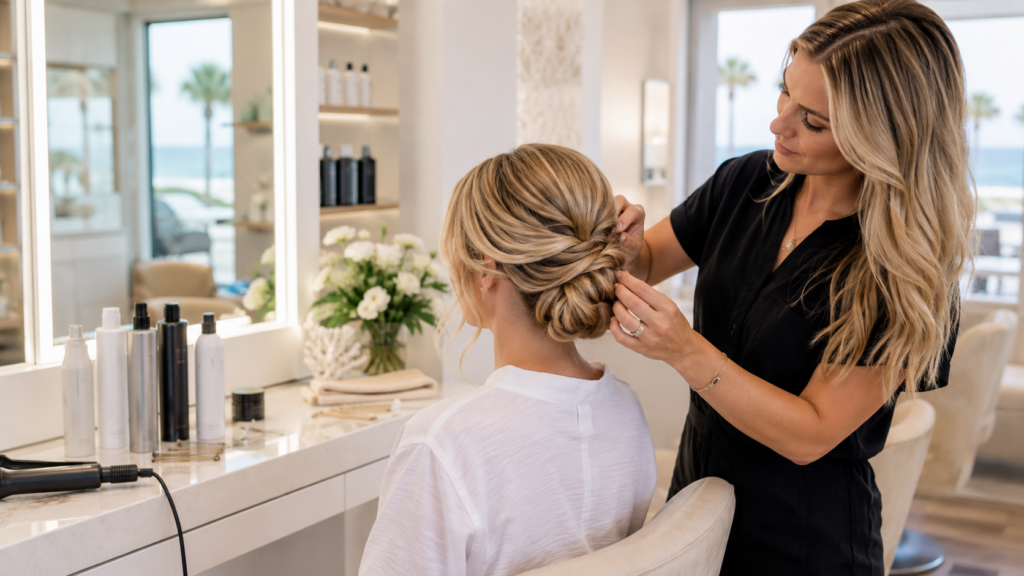
Outdoor events require a style that looks good from multiple angles and survives the full schedule. Event-ready humidity proof hairstyles balance structure, movement, and comfort. Tell your stylist where the event will be held, how long you will be outdoors, and whether you plan to change outfits or add accessories.
Bring photos that show the overall feeling you like, but remain open to adjustments for your texture and the weather.
For photos, avoid a style that hides all movement unless that is intentional. Soft texture often photographs naturally against beach scenery and coastal light.
For weddings, secure the shape with hidden structure. Pins, sectioning, and internal support usually matter more than a thick coat of spray.
A trial appointment can be useful for brides or anyone planning a highly photographed event. Professional humidity proof hairstyles are customized around the hair, location, accessories, and expected conditions.
When to Book Halo’s Blowout Bar
A professional appointment is useful when the event matters, the timeline is tight, or you do not want to experiment in a vacation rental bathroom.
Halo’s Blowout Bar can prepare the hair with professional products, controlled sectioning, and a finish chosen for the day’s weather and your natural texture.
A blowout does not have to mean pin-straight hair. It can create polished volume, smooth movement, soft waves, or the foundation for a ponytail, braid, or updo.
For a wedding weekend, family photo session, birthday dinner, date night, or special event, ask for humidity proof hairstyles that can hold their shape while still looking touchable.
Book early during summer weekends, holiday periods, and wedding season so the appointment fits your schedule.
What to Carry for Midday Touch-Ups
A small emergency kit can save a style without encouraging constant restyling.
Carry a few bobby pins, a soft elastic, a travel-size finishing product, and a small comb or edge brush. Curly hair may benefit from a tiny amount of curl refresher.
Blot moisture rather than rubbing the hair with a towel. Avoid repeatedly brushing hair that has already expanded because brushing may increase frizz.
If the style begins to soften, convert it rather than fighting it. Waves can become a half-up style, a ponytail can become a bun, and loose hair can move into a braid.
Flexible humidity proof hairstyles give you options instead of one fragile finished look.
Common Summer Hair Mistakes on 30A
The first mistake is using too much heavy oil before going outside. The hair may look smooth indoors but become flat, separated, or greasy in heat.
The second is straightening damp hair or using repeated high-heat passes. The finish may not last, and the extra heat can increase damage.
The third is choosing a very tight style for an all-day event. Discomfort, scalp tension, and breakage are not signs that a style is secure.
The fourth is ignoring the forecast and location. A fully outdoor beach wedding requires a different plan from an indoor dinner.
The fifth is touching the hair constantly as it reacts to humidity. Give the product and shape time to settle.
The most successful humidity proof hairstyles are comfortable, adaptable, and suited to the actual day.
A Simple 30A Summer Hairstyle Plan
For a casual beach day, choose loose braids, a low bun, or a curly ponytail. Use lightweight preparation and carry one backup elastic.
For a daytime event, consider textured waves, a half-up style, or a polished ponytail. Build in enough hold to survive transitions between air conditioning and outdoor heat.
For an evening out, a smooth low bun, braided updo, or professional blowout with soft movement can feel polished without becoming fragile.
For a wedding or photo shoot, schedule a consultation or styling appointment and discuss humidity, wind, accessories, timing, and your natural texture.
Humidity proof hairstyles work best when the style, products, preparation, and event plan all support one another.
Make Your Hair Work With the 30A Climate
The Gulf Coast climate is part of what makes summer on 30A beautiful. Your hairstyle should allow you to enjoy the day instead of checking the mirror every few minutes.
Humidity proof hairstyles do not promise that every strand will remain unchanged. They create a shape that stays attractive as the hair moves, softens, or gains texture.
Choose a style that suits your hair type, use products strategically, avoid unnecessary tension and heat, and keep a simple backup plan.
For a wedding, photos, or a night out, book Halo’s Blowout Bar for a professional style designed around your hair and the realities of a 30A summer day.