
30A Wedding Hair Stylist: Your Guide to Effortless Beach Wedding Hair
Choosing a 30A wedding hair stylist is about more than finding someone who can recreate a beautiful inspiration photo. Your stylist also needs to understand Gulf Coast humidity, ocean breeze, ceremony timing, veil placement, photography, travel logistics, and how your hairstyle should feel after hours of movement.
Destination brides getting married near Watersound, Seaside, Rosemary Beach, WaterColor, and surrounding 30A communities often compare salon-based styling with fully mobile bridal services. Both can work well, but the best choice depends on your timeline, wedding party, venue, transportation, beauty priorities, and how much structure you want on the wedding morning.
This guide explains how to choose a hairstyle that holds up in coastal conditions, when to book a trial, what to bring to your consultation, how extensions can add volume, and why a calm salon experience can be the right beginning to your wedding day.
Why Choosing a 30A Wedding Hair Stylist Requires Local Knowledge
Beach wedding hair has to perform in a setting that is beautiful but unpredictable. An experienced 30A wedding hair stylist plans for the weather before choosing the final shape. Humidity can soften curls, breeze can loosen face-framing pieces, and outdoor ceremonies may involve sun, mist, heat, and travel between locations.
A local stylist understands that a style must be designed for the full day, not only the first mirror photo. The hairstyle should survive dressing, portraits, transportation, the ceremony, family photos, dinner, and dancing.
A knowledgeable 30A wedding hair stylist will ask where the ceremony and reception are located, whether the venue is indoor or outdoor, how long you will be outside, and whether you are wearing a veil, comb, headband, flowers, or another accessory.
Local experience also helps with realistic scheduling. Traffic, parking, community access, resort layouts, and wedding-season demand can affect how much time should be built into the morning.
Salon-Based Bridal Hair Versus Fully Mobile Styling
Mobile styling can be convenient when a large wedding party wants every service completed at one rental home or venue. However, a salon-based appointment offers advantages that many destination brides overlook.
A salon provides professional lighting, mirrors, chairs, outlets, sinks, styling tools, backup products, and a controlled environment. The bride does not need to create a temporary beauty station in a crowded bedroom or kitchen.
A salon-based 30A wedding hair stylist can also manage humidity and temperature more consistently during styling. The finished look is created in a space designed for professional hair services rather than beside luggage, food, photographers, and people moving through the room.
The best option depends on the wedding. A bride with a smaller beauty group may enjoy the calm and structure of an in-salon appointment. A very large party or tightly scheduled venue may prefer mobile services.
Advantages of an In-Salon Trial
A trial inside the salon gives the stylist access to the same tools, lighting, products, and setup that may be used for the final appointment. This makes the experience easier to repeat.
You can sit comfortably, view the style from multiple angles, and make thoughtful adjustments without the distractions of a wedding-day environment.
Advantages of an In-Salon Wedding Morning
The salon can act as a calm checkpoint before the wedding schedule accelerates. You arrive with clean, prepared hair, complete the styling appointment, and leave with a finished look and clear instructions.
For many brides, that separation creates a more relaxed experience than having every vendor arrive at the rental at the same time.
The Best Coastal Bridal Hairstyles for 30A
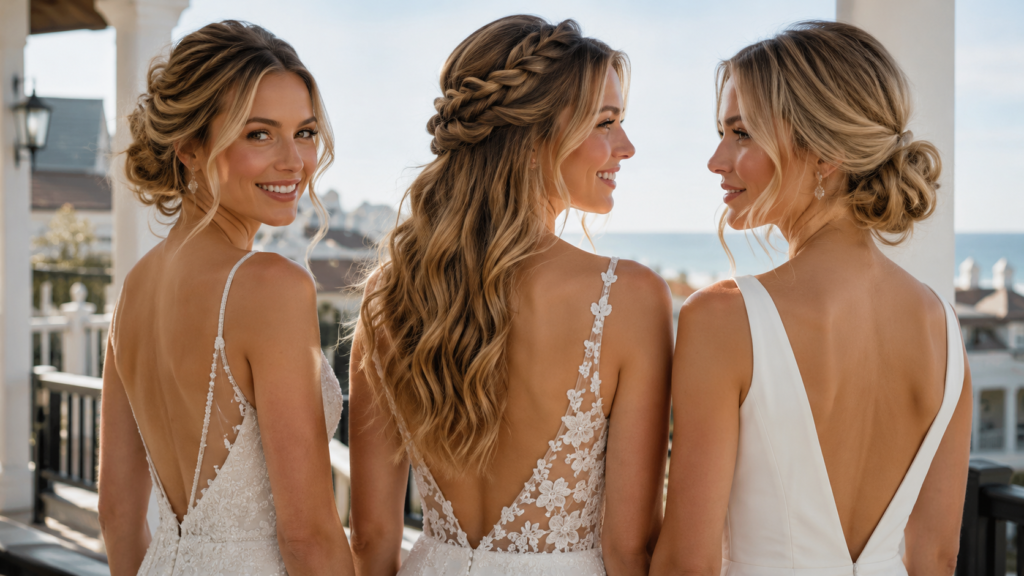
The strongest beach wedding styles combine beauty with flexibility. A skilled 30A wedding hair stylist builds security beneath a soft, effortless finish. A small amount of movement should make the style look softer, not broken.
Soft Undone Updo
A soft updo is one of the most reliable choices for coastal weddings. Hair is secured off the neck while maintaining texture and softness around the crown and face.
The internal structure should be stronger than the finished style appears. Pins, sectioning, preparation, and controlled texture create security without making the updo look stiff.
A 30A wedding hair stylist may recommend limiting very fine loose pieces around the face when the ceremony is directly on the beach. A few intentional strands can look romantic, but too many may blow across the face during vows and photos.
Braided Half-Up Style
A braided half-up style provides structure around the crown while leaving length visible. It works especially well for brides who want movement in photographs without wearing all their hair down.
Braids can help anchor a veil or accessory and keep the front sections away from the face. The loose hair can be styled in soft waves, defined curls, or a more natural texture.
This option works best when the stylist considers the bride’s density, length, extension placement, and how quickly her curls normally relax.
Low Chignon
A low chignon feels timeless, polished, and appropriate for many dress styles. It is especially practical for breezy ceremonies because most of the hair remains controlled near the nape.
The shape can be sleek and architectural or soft and textured. A low chignon also gives a stylist a strong base for securing a veil or decorative comb.
Textured Ponytail
A polished ponytail can feel modern and relaxed while keeping hair away from the face. It can be worn high, mid-level, or low depending on the neckline and desired mood.
For coastal weddings, the ponytail should have internal support and enough texture that natural movement does not make it appear unfinished.
Why Wedding-Morning-Proof Matters More Than Trial-Day Perfection
A trial takes place under controlled conditions. Your 30A wedding hair stylist should use it to predict the real wedding morning rather than treat it as an isolated appointment. The wedding day includes emotion, movement, weather, photography, accessories, and a much longer wear time.
The goal of the trial is not to produce one perfect photo and copy it without thought. It is to learn how your hair behaves, how the shape suits your face and dress, and which adjustments will improve durability.
A skilled 30A wedding hair stylist uses the trial to test preparation, volume, parting, texture, accessory placement, and comfort. The stylist should also ask how your hair normally holds curl and whether you tend to touch or adjust it during the day.
A hairstyle that looks slightly more structured at the beginning may soften into the ideal finish by the ceremony. A style that looks perfect but fragile at the trial may not survive a humid wedding morning.
Humidity, Ocean Breeze, and Hair Preparation
Humidity can cause hair to absorb moisture and return toward its natural texture. Highly porous, color-treated, curly, or coarse hair may react more visibly than hair with lower porosity.
Preparation should begin with the correct wash schedule and products. Your stylist may want clean, fully dry hair or may recommend washing the evening before, depending on your texture and planned style.
Avoid experimenting with a new deep treatment, oil, or heavy mask immediately before the wedding. Too much softness can reduce grip and make the style harder to secure.
A 30A wedding hair stylist will often use layered preparation: moisture balance, heat protection, texture support, controlled finishing products, and strategic pinning.
The National Weather Service explains that dew point indicates the amount of moisture in the air. Higher dew points generally signal muggier conditions, which is why a wedding-day hairstyle should be selected with the coastal forecast in mind.
Hair Extensions for Bridal Volume and Length
Extensions can add fullness, length, color dimension, or extra structure for an updo. A 30A wedding hair stylist can recommend only the amount needed for the chosen look. They are not only for brides who want dramatically longer hair.
A small amount of added hair can make a braid look fuller, support a ponytail, or create a more balanced chignon. Extensions can also help soft waves remain visually substantial after they relax.
The best method depends on your natural hair, planned style, timeline, maintenance commitment, and whether you want to continue wearing the extensions after the wedding.
A consultation with your 30A wedding hair stylist should happen early enough to select the method, order or color-match hair, complete installation, and allow time for any adjustments.
When to Add Extensions
Do not schedule a first-time extension installation immediately before the wedding. You need time to learn how the hair feels, how to wash it, and how it behaves in your daily routine.
The installation and color should be settled before the final bridal trial whenever possible.
Choosing the Right Amount
More hair is not always better. Too much weight can feel uncomfortable and make an updo harder to balance.
The stylist should recommend the amount needed for the specific finished style rather than automatically maximizing length and density.
When to Book Your Wedding Hair Stylist
Popular wedding dates can fill far in advance, especially during spring and fall wedding seasons. Begin contacting stylists as soon as your venue and date are confirmed.
For a destination wedding, booking early also gives you more options for trial timing. Brides who do not live locally may coordinate a trial with a venue visit, engagement session, shower, or planning weekend.
Your 30A wedding hair stylist should provide clear booking requirements, deposits, cancellation terms, service timing, and information about trials or additional party members.
Do not assume the date is held because you exchanged messages. Confirm the booking process and receive written confirmation.
A Simple Bridal Hair Timeline
Every wedding is different, but a clear timeline reduces stress and prevents last-minute decisions. Your 30A wedding hair stylist should help you place each beauty appointment in the correct order.
Nine to Twelve Months Before
Research local stylists, review portfolios, decide whether you prefer salon-based or mobile service, and request availability.
Book early when your wedding falls on a holiday weekend or during peak season.
Four to Six Months Before
Finalize the general hair direction and decide whether you may want extensions. Begin planning color, cut, and hair-health appointments.
Avoid dramatic changes without discussing how they may affect the bridal style.
One to Three Months Before
Complete the bridal trial. Bring the veil, accessories, and inspiration photos whenever possible.
Photograph the style from the front, sides, and back. Wear it for several hours and note comfort, hold, and any changes you want.
Wedding Week
Complete any planned color or trim according to your stylist’s recommendation. Confirm the appointment time, preparation instructions, address, parking, and who will attend.
Avoid last-minute experiments with new products, chemical services, or major cuts.
What to Bring to a Bridal Hair Consultation
Bring several inspiration images, but choose photos for specific reasons. One may show the texture you like, another the height at the crown, and another the front view.
Bring a photo of your dress, especially the neckline and back. The hairstyle should complement the overall silhouette rather than compete with it.
Bring your veil and hair accessories if available. The stylist needs to test weight, attachment, placement, and removal.
Tell your 30A wedding hair stylist about extensions, color history, scalp sensitivity, previous reactions to products, and any areas where pins or tension become uncomfortable.
Also bring honest expectations. If your hair does not normally hold curl for more than an hour, the stylist needs to know before choosing an all-down style.
How to Prepare for the Bridal Trial
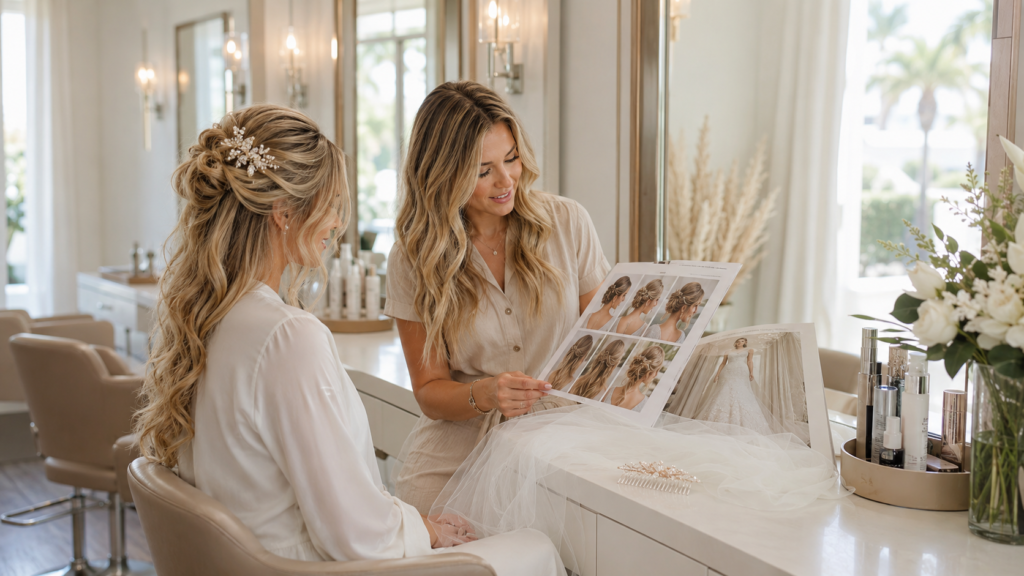
Follow the salon’s exact preparation instructions. Arriving with wet hair, heavy oil, or an unplanned wash schedule may reduce the time available for testing the actual style.
Wear a top with a neckline similar to the dress when possible. A white or light-colored top can make it easier to judge the overall bridal feeling.
Schedule enough time that you do not need to rush. The trial should include consultation, styling, adjustments, photos, and a plan for the wedding day.
A 30A wedding hair stylist should use the trial to make decisions, not merely demonstrate technical skill.
Veils, Combs, Flowers, and Hair Accessories
Accessories should be planned as part of the hairstyle rather than added at the last minute. A 30A wedding hair stylist can test the veil and comb during the trial.
A heavy veil needs a secure anchor. A delicate comb may require hidden support. Fresh flowers should be selected and prepared with the florist so they remain attractive and do not release moisture or residue onto the hair.
Ask who will remove the veil after the ceremony if you do not want to wear it for the reception. The stylist can explain how to remove it without disturbing the hairstyle.
Your 30A wedding hair stylist should also consider how the accessory appears in close photographs and from the back during the ceremony.
Bridal Hair for Different Hair Types
Fine hair often needs texture and strategic support without heavy product. Extensions may help create fullness, but the installation and weight must suit the natural hair.
Thick hair needs thoughtful sectioning so the finished style feels balanced and does not depend on one tight elastic or cluster of pins.
Curly and textured hair can look beautiful when the natural pattern is respected. The stylist should discuss whether you want to enhance, stretch, smooth, or combine textures.
Color-treated hair may require additional moisture balance and heat protection. The American Academy of Dermatology advises using lower heat and avoiding styles that pull excessively, both of which are relevant when preparing hair for a long event.
A professional 30A wedding hair stylist should adapt the design to the person rather than force every bride into the same trending style.
Bridal Party Hair Without a Chaotic Morning
Bridesmaids, mothers, and additional guests need realistic service times. A large party cannot be scheduled by multiplying one bride’s appointment time across every person.
Collect style preferences in advance and identify anyone with very long, thick, curly, short, or extension-treated hair. These factors can affect timing.
Set one clear preparation standard for the group. Everyone should know whether to arrive with clean, dry hair and what products to avoid.
A salon-based 30A wedding hair stylist can keep the group organized with professional stations, mirrors, tools, and a defined appointment flow.
Adding Special Event Makeup
Hair and makeup should be planned together because both affect the schedule, photography, and overall look. Coordinating both with a 30A wedding hair stylist can simplify the morning.
A one-stop salon experience can reduce travel between vendors and simplify communication. It also gives the bride one place to confirm timing, preparation, and beauty services.
Discuss whether you want natural, soft-glam, or more defined makeup. The artist should consider outdoor light, photography, heat, and how the makeup will transition into evening.
When booking a 30A wedding hair stylist at Halo, ask about special event makeup options and whether the timing can be coordinated for the bride or additional party members.
What Bridal Hair Pricing Should Include
Wedding hair pricing may reflect consultation, trial, wedding-day styling, extensions, accessories, additional party members, early appointments, and special scheduling.
Compare services rather than one headline price. A lower quote may exclude the trial, extension preparation, accessory placement, or the amount of time needed for a complex style.
Ask what happens if the style changes after the trial, if hair must be added, or if the party size changes.
A clear 30A wedding hair stylist proposal should explain deposits, balances, cancellations, rescheduling, appointment location, and what is included.
Questions to Ask Before Booking
Ask whether the stylist regularly works with beach weddings and outdoor ceremonies. Ask how they plan for humidity, wind, and veil security.
Ask what the trial includes and whether adjustments can be made. Confirm whether extensions, accessories, and makeup can be coordinated.
Ask how long the appointment will take and how early you should finish before leaving for the venue.
Finally, ask what your hair must look like when you arrive. The best wedding mornings begin with clear preparation instructions.
Why Halo Is a Strong Salon-Based Option
Halo offers brides a professional salon environment for consultation, trials, bridal styling, and complementary beauty services.
The salon setting provides proper lighting, mirrors, styling stations, professional products, and a controlled place to prepare before stepping into the coastal climate.
A Halo 30A wedding hair stylist can help choose a look that suits your hair, dress, venue, accessories, and complete wedding-day schedule.
The goal is not to make your hair feel overly fixed. Your 30A wedding hair stylist should create structure that still feels natural and comfortable. It is to create a polished style that photographs beautifully, feels comfortable, and remains intentional as the day unfolds.
Your 30A Wedding Hair Stylist Booking Checklist
Confirm the wedding date, ceremony location, appointment location, party size, and desired completion time.
Book the trial, prepare inspiration photos, bring the veil and accessories, and discuss whether extensions are needed.
Follow the wash and preparation instructions. Confirm makeup, parking, travel, and final payment details.
A prepared bride gives the 30A wedding hair stylist the information needed to create a smoother, calmer experience.
Create an Effortless Look That Lasts Beyond the Ceremony
Effortless bridal hair is carefully planned. The style, products, preparation, accessories, extensions, and timing all work together behind the scenes.
A trusted 30A wedding hair stylist will help you choose a look that fits your natural hair and the realities of a coastal wedding, rather than designing only for a perfect indoor trial photo.
Whether you choose a soft undone updo, braided half-up style, low chignon, or textured ponytail, the finished look should feel like you and support the entire celebration.
Book a bridal consultation with a Halo 30A wedding hair stylist to plan your trial, extensions, wedding hair, and special event makeup in one professional salon experience.